
What Is an LMS? A Complete Guide
Nowadays, educational content and learning behavior have changed 180 degrees. Conventional classrooms and printed handouts are outdated. And no one bothers to read and write; instead, screens are the new books! To meet the hi-tech era’s learning needs, educators and corporations prefer quick learning and improved outcomes offered by digital platforms like learning management systems.
What is a Learning Management System?
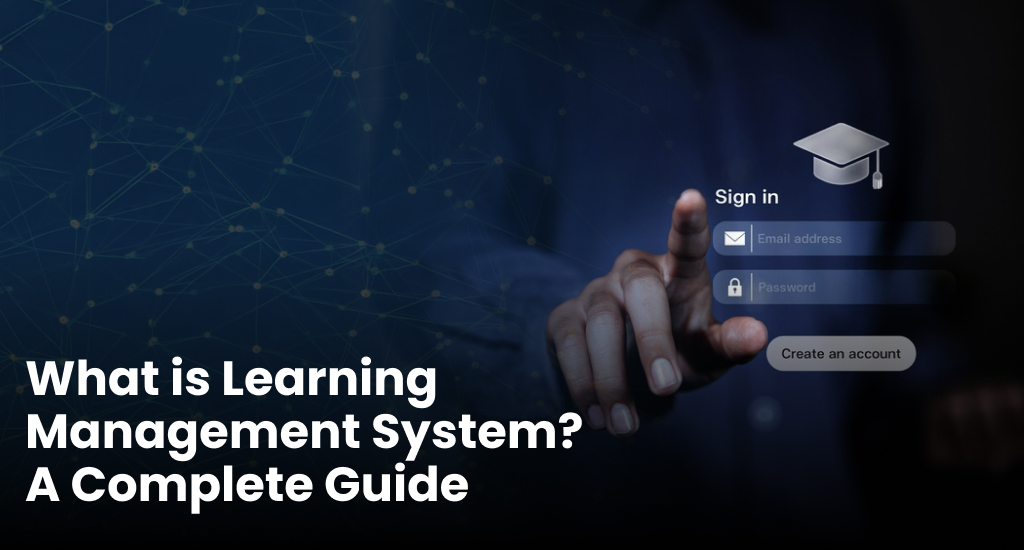
LMS, or learning management system, offers educators and trainers a scalable platform perfect for their teaching needs. Instructors can upload learning videos, documents, or training modules to it, which can be shared with multiple authorised users. Whether a university managing numerous students or a company training new employees, learning management software can simplify the entire learning process. Isn’t it great? Now, let’s explore how an LMS works, its key features, benefits, and how to choose the right platform as per business needs.
Advanced Learning Management System
In an advanced LMS, a central environment allows authorised users to manage content and track learning performance. The overall system is secure and provides restricted access permissions for official users. In LMS portals, administrators manage and configure permissions and can allow partial or complete access to LMS portals. Instructors manage learning content and assign tasks to learners. Learners or employees have limited access to the LMS dashboard, and they can take online classes, submit tasks, quizzes, etc. The learning content management system also allows administrators and instructors to evaluate learner participation through a reporting feature.
*Note: An LMS can use cloud hosting or be installed on an institution’s server.
Key Features of LMS
The following are the key features of an efficient learning management system:
1. Course and Learning Content Management
Learning management solution tools help instructors upload educational content in structured lessons and modules. They can upload a variety of content formats such as embedded videos and documents. LMS portals come with automated content libraries that assign learning content to learners. It is a core content management feature that allows flexible and easy LMS portal management for admins.
2. Student Management
One of the core features of any LMS is its learner management. LMS portals permit single or multiple admins to manage numerous users. For instance, in educational institutions, learning management system admins can configure access permissions and register students. Thus, registered learners can access CMS dashboards, select courses, and submit tasks. However, businesses can leverage LMS CMS for training employees according to their training needs and skill levels.
3. Performance Monitoring
Performance monitoring is one of the best LMS features. It allows organisations to evaluate their learning content and trainee or learner performance. The assessment feature shows a clear picture of student learning curves, which allows instructors to upgrade or tweak learning material accordingly.
4. Communication
Hands-on learning requires group discussions to get others’ perspectives. Fortunately, most learning management solutions come with built-in discussion pages, live messaging, and integrated conferencing tools. This way of communication supports active participation of students, trainees, and instructors. This is an excellent learning management solution for hybrid and remote learners.
5. Accessibility & Integrations
Learning management software offers integration features. So, a university LMS or business learning management software can integrate student databases or 3rd party APIs. LMS learning systems are mobile-compatible and accessible to various tech environments and devices.
Benefits of LMS learning management
LMS comes with numerous benefits; some of them are:
- LMS offers centralized learning. It distributes learning content to various channels and can be managed from one dashboard.
- LMS portals allow anytime access, which makes learning easy, as students are not bound to specific timing.
- Automated LMS management systems reduce the frequency of repetitive tasks. So, instructors get more time to focus on content preparation and teaching.
- Owing to LMS performance analytics, businesses and educational institutions can get measurable outcomes: This feature assists in better course design and upgrades.
- Learning management solutions provide consistent learning experiences to numerous users, without relying on system updates every time the number of users increases.
Learning Content Management System (LCMS) And LMS
Many people get confused between LMS and learning content management system (LCMS); both are digital LMS platforms with different purposes.
An LMS is best for course management and learning content distribution. It also assists in student/trainee enrolment, progress tracking, and assessments. On the contrary, LCMS allows the creation of content and provides storage and organization features. For example, businesses can use LCMS for reusable training courses and LMS to assign them to employees to track performance and success scores. Many learning management solutions provide combined platforms so business and university LMS can get both features.
Open Source Learning Management Software
Many enterprises and educational institutions are using open-source learning management software like Moodle. Moodle software helps educators compile educational content in the LMS and can assess students’ performance through their participation and task completion.
How to Choose the Right Learning Management System
Before investing in learning management software, organizations must evaluate their needs and goals to make a profitable decision. There are many factors to consider while selecting an LMS, but a few of the most important ones are:
- A learning management system must be easy to use; in this way, everyone can access it easily without having specific technical knowledge.
- LMS must have necessary features and automation.
- Scalable LMS are best: They do not require technical updates when users increase.
- Learning management software should have integration features and must be compatible with organisations’ existing training software.
- LMS should have high-end privacy and security features.
- It must be cost-efficient so small businesses and institutions can afford it.
The Wrap Up
If you are figuring out which learning management solution is best for your business, SipSap has you covered! Our experts carefully analyse business needs and offer the most suitable learning management system software.
Contact SipSap now and make a smart choice!