
Why SAP ERP Is a Game-Changer for Small Business Growth
Small businesses often survive in high-competition environments that require well-informed decision-making. This is only possible when decision-makers have access to integrated data for every business function, be it inventory, HR, finance, sales, etc. The good news is that SAP ERP offers software that caters to all the needs of small businesses: SAP Business One.
What Is SAP ERP and Why Does It Matter for Small Businesses?
SAP ERP is an Enterprise Resource Planning software that connects all core business operations into a unified system. SAP Business One delivers seamless operational control for small businesses at a highly affordable cost. This means all crucial operations of supply chain, finance, reporting, and other functions can be operated from a centralized hub.
Key Benefits of SAP ERP for Small Businesses
1. Real-Time Business Visibility
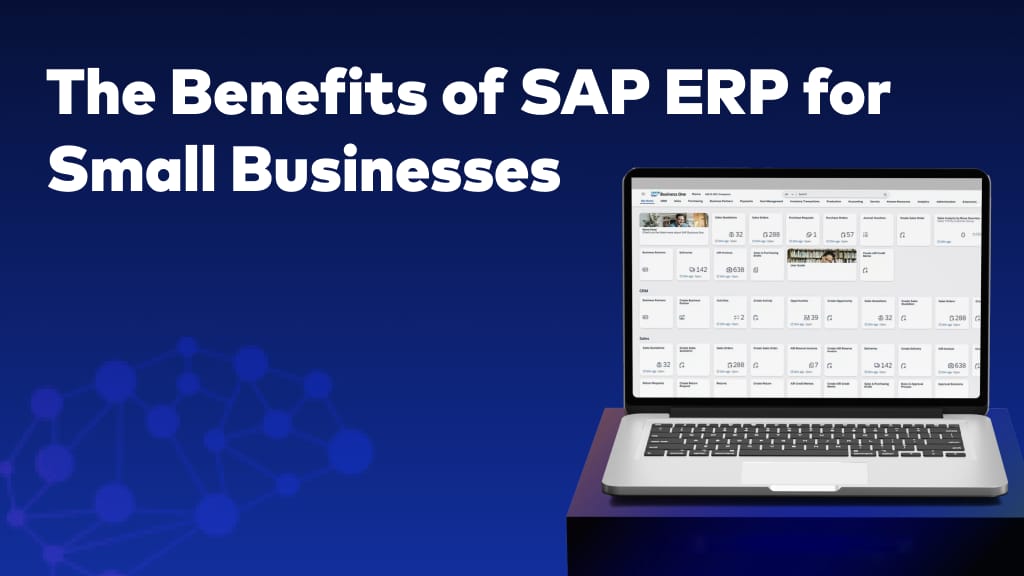
SAP ERP for small businesses offers real-time access to the business core operations data. This data is one of the most crucial things for small businesses to survive and grow. It allows owners and managers to access dashboards for various operations showing sales trends, real numbers, and detailed reports.
Small business owners and CFOs can evaluate real-time data at different intervals to tweak or change strategies, as instant strategy performance reviews make decision-making seamless, unlike conventional methods in which they have to wait for the end of the month to review different reports.
2. Streamlined Financial Management
Another key advantage of SAP ERP is automation. It automates all crucial business operations to reduce the time and manual effort for the workforce. It eventually reduces the risk of errors. Automated financial management allows finance managers to focus more on business growth strategies instead of data entry.
Automated analytics and tax accounting ensure that small businesses stay aligned with local and international regulations.
3. Inventory and Supply Chain Control
One of the main causes of small business failure is flawed inventory management. SAP Business One provides an automated solution to this issue by monitoring all supply chain operations in real-time. It maintains a high order completion rate and improves customer satisfaction.
4. Improved Customer Relationship Management
Every business success depends upon customer satisfaction, and the built-in CRM of SAP ERP allows small businesses to monitor customer sales, their interactions, and service requests all from one CRM in just a few clicks. This gives sales teams a bird’s-eye view of every customer journey and makes it easier for them to improve customer relationships, which eventually grows business and boosts revenue.
5. Scalability Without System Overhauls
Over time, many small businesses face the issue of software overhauls. Fortunately, SAP Business One comes with a solution to this. It scales as the business grows. Whether they add new products, new users, or expand into new markets, the platform adapts without requiring a complete system replacement. This scalability makes SAP ERP a long-term investment rather than a short-term fix.
6. Analytical Decision Making
SAP ERP generates customizable reports through consolidated data from all the departments. It allows small businesses to identify which products or services are more profitable, which require a new strategy, and which need to be halted. Thus, managers can track operational costs and forecast demand with confidence. Previously, this type of data access required dedicated teams, which means more cost! But SAP Business One makes everything accessible to small businesses economically.
7. Enhanced Operational Efficiency
SAP ERP automation reduces operational costs significantly. Workflows for order processing, invoicing, approvals, and reporting are standardized and automated, which means fewer bottlenecks and faster cycle times, which allow teams to spend more time on business growth strategies.
Is SAP ERP Cost-Effective for Small Businesses?
Yes, SAP Business One offers flexible pricing and licensing models, including cloud-based subscriptions that reduce upfront hardware and IT costs. The ROI comes from reduced manual labor, fewer errors, better inventory control, and improved sales performance.
Partnering with a certified SAP Business One implementation partner, such as SipSap, ensures that small businesses get a solution as per their specific needs without paying for features they do not require.
Common Industries Using SAP ERP for Small Business
SAP Business One serves various industries, including:
- Manufacturing: Assist in bill of materials, production planning, and quality control
- Retail and Distribution: Assist in supply chain functions and point-of-sale integration
- Professional Services: Assist in all project management functions
- Food and Beverage: Assist in all functions of batch management and regulatory compliance
Getting Started with SAP ERP for Small Business
The implementation process begins with a business needs assessment. It gives a picture of current operations and makes it easy to identify the key pain points. SipSap is a certified SAP Business One partner and deals with all types of system configuration along with team training.
Are you ready to explore SAP Business One? Contact SipSap’s expert team now.